




Ordering and Delivery
How can I place an order?
Selected products can be purchased through our online shop. You can also request a quotation or email your requirements to our orders team.
If you have already received a quotation, include the quotation number and delivery address when placing your order.
Is there a minimum order quantity?
There is no general minimum order quantity for products available through our online shop. We can supply individual units or full loads.
Minimum quantities may apply to customised products, special colours, branding and certain collection or delivery services.
How much does delivery cost?
Standard delivery is free on qualifying orders over £400 excluding VAT. A standard delivery charge applies below this value.
Additional charges may apply for next-day, timed, Saturday, tail-lift and remote-area deliveries. The applicable cost will be displayed at checkout or confirmed in your quotation.
How quickly will my order arrive?
Stock products are normally delivered within two to three working days. Certain locations, large orders and customised products may take longer.
Your expected delivery date will be confirmed when your order is processed.
Do you offer next-day delivery?
Yes. Next-day delivery is available on many in-stock products when ordered before 2 PM, subject to availability and an additional charge.
Please select the service during checkout or confirm your requirements with our team.
Do I need a forklift to unload my order?
Not necessarily. A tail-lift delivery can be requested if you do not have suitable unloading equipment.
An additional charge may apply. Please ensure there is suitable vehicle access and a firm, level unloading area.
Can I collect my order?
Yes. Collection is available for most products from our premises at Eling Wharf, Totton, Southampton.
Please arrange your collection in advance so we can confirm that the order is ready.
What should I do if my order arrives damaged or incomplete?
Record any damage or shortage on the delivery paperwork before signing for the consignment. Contact us as soon as possible, and within seven days of delivery.
Please provide photographs of the products, packaging and delivery paperwork so we can investigate.
Can I return my order?
Unused eligible stock items may be returned within four weeks of delivery, subject to our returns policy.
Customised, branded or specially manufactured products may not be returnable unless faulty or incorrectly supplied. Contact us before returning any goods.
Choosing a Plastic Pallet
What are plastic pallets used for?
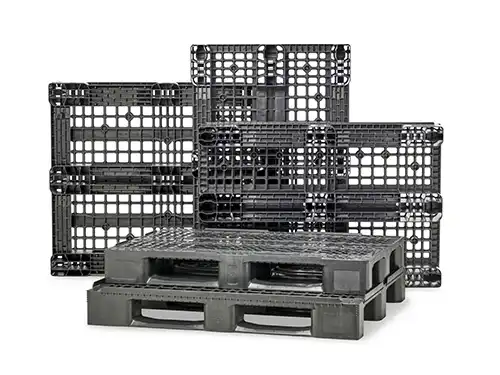
Plastic pallets are used to store, handle, and transport goods across industries, including food and drink, pharmaceuticals, manufacturing, retail, warehousing, and logistics.
Different designs are available for export, reusable distribution, hygienic environments, pallet racking and automated handling systems.
What sizes of plastic pallet do you supply?
Our most popular sizes include:
UK standard pallets – 1200 × 1000mm
Euro pallets – 1200 × 800mm
Half pallets
Quarter pallets
Non-standard sizes
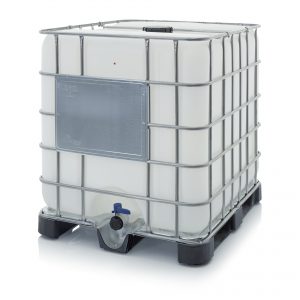
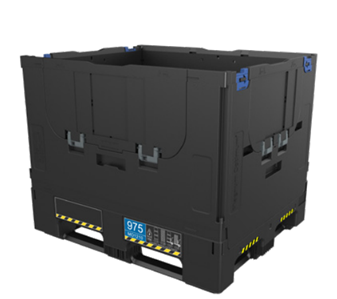
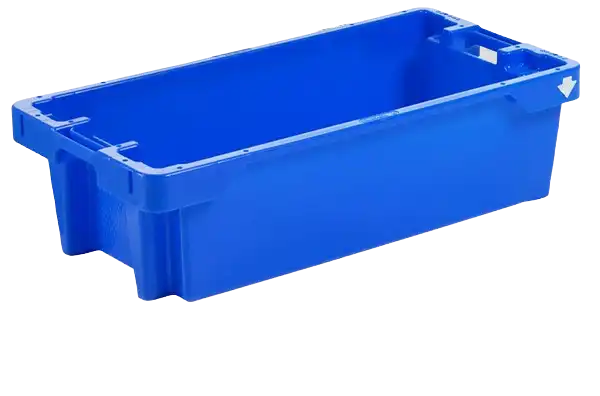
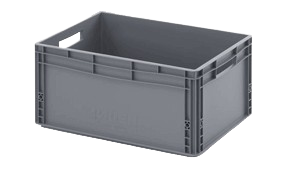
We also supply plastic pallet boxes, folding pallet boxes, Euro containers, fish boxes, meat crates and space-saving containers.
How do I choose the right plastic pallet?
Consider the following before ordering:
Product weight and load distribution
Static, dynamic and racking load requirements
Pallet racking configuration
Forklift or hand pallet truck use
Conveyor or automated system requirements
Operating temperature
Hygiene or food-contact requirements
Whether the pallet will be exported
Whether a nestable or stackable design is preferred
Our team can recommend a suitable model if you provide application details.
What is the difference between static, dynamic and racking loads?
Static load refers to the maximum evenly distributed load a pallet can support while stationary on a firm, level surface.
Dynamic load refers to the load supported while the pallet is being moved by suitable handling equipment.
Racking load refers to the load supported when the pallet is stored in a defined racking configuration with less support beneath it.
These figures are not interchangeable. Always check the individual product specification and consider your load distribution, temperature and operating conditions.
Can plastic pallets be used in pallet racking?
Some plastic pallets are designed for racking, while others are not. Rackable models may include reinforcing rods or runners to improve performance.
Suitability depends on the unsupported span, load weight, load distribution, temperature, and how long the pallet stays in the rack. Tell us about your racking system before ordering so we can help you choose the correct model.
Are plastic pallets suitable for forklifts and hand pallet trucks?
Many models can be handled using forklifts and hand pallet trucks, but compatibility varies according to the pallet’s entry points, underside design and the equipment being used.
Check the product specification or contact our team if you need two-way or four-way entry, runners, or a specific fork-opening size.
What is the difference between nestable and rackable plastic pallets?
Nestable pallets fit inside one another when empty, helping reduce storage space and return transport costs. They are commonly used for export and lighter-duty distribution.
Rackable pallets are designed to support loads in a specified pallet-racking configuration. They are generally heavier and may contain reinforcement.
A nestable pallet should not be assumed to be suitable for racking unless this is specifically stated in its product specification.
Do you supply new and used plastic pallets?
Yes. We supply new and used plastic pallets in a wide range of sizes and specifications.
Used plastic pallets offer a cost-effective, sustainable option, though colour, appearance, and minor surface marks may vary. They should still be selected according to their intended load and application.
Can plastic pallets be customised?
Custom colours, printing, branding, RFID tags and other identification options may be available on selected models, normally subject to minimum order quantities.
Materials, Hygiene and Temperature
What are plastic pallets made from?
Plastic pallets are generally manufactured from high-density polyethene (HDPE) or polypropylene (PP). The best material depends on the intended load, operating temperature, hygiene requirements, and manufacturing process.
Many of our products contain recycled plastic, and selected models are made from 100% recycled material. Check the individual product page for the composition of a particular pallet.
Are plastic pallets suitable for food and pharmaceutical applications?
Selected hygienic plastic pallets are suitable for use in food, pharmaceutical and other controlled environments.
However, not all plastic pallets are approved for direct food contact. If food-contact compliance is required, tell our team before ordering and check the individual product documentation.
Are plastic pallets easy to clean?
Plastic pallets have non-absorbent surfaces and can generally be cleaned more easily than wooden pallets.
The appropriate washing temperature, pressure and cleaning chemicals depend on the pallet material and model. Always follow the product guidance and make sure cleaning agents are suitable for your operation.
Can plastic pallets be used in cold stores or freezers?
Selected plastic pallets and boxes can be used in chilled or frozen environments, but temperature resistance varies by material and model.
Low temperatures can affect impact resistance and load performance. Please provide the minimum operating temperature when requesting a recommendation.
Are plastic pallets resistant to chemicals?
Plastic pallets can resist many oils, acids, alkalis and cleaning chemicals, but compatibility depends on the plastic material, chemical concentration, temperature and exposure time.
If chemical resistance is important, provide the chemical name and operating conditions before ordering.
Automation and Specialist Applications
Can plastic pallets be used in automated systems?
Selected plastic pallets can be used with conveyors, automated storage and retrieval systems and robotic handling equipment. Their consistent dimensions can make them well suited to automated applications.
However, compatibility must be checked against the complete system. This includes conveyor spacing, sensors, rollers, pallet deflection, concentrated loads, suction equipment, temperature and racking configuration.
We strongly recommend testing representative pallets through every stage of the process before placing a production order.
Are plastic pallets suitable for heavy loads?
Yes, selected models are designed for heavy-duty applications. However, the relevant static, dynamic and racking load capacities can differ significantly.
Published capacities normally assume a uniformly distributed load under defined test conditions. Point loads, high temperatures, long storage periods and unsupported racking can reduce real-world performance.
What features can plastic pallets include?
Depending on the model, available features can include:
Open or closed decks
Nestable feet
Three or five runners
Steel reinforcement
Anti-slip inserts
Raised perimeter lips
Solid hygienic surfaces
Drainage holes
Printing or branding
RFID or identification options
Our team can help you identify which features suit your operation.
Exporting Plastic Pallets
Do plastic pallets need ISPM 15 heat treatment?
No. ISPM 15 applies to regulated solid wood packaging material. Plastic pallets do not require heat treatment or an IPPC mark, making them a convenient option for international shipping.
Customers should still check whether their destination has any separate customs, hygiene or packaging requirements.
Can plastic pallets be exported worldwide?
Plastic pallets are widely used for international exports because they don’t require ISPM 15 treatment.
Lightweight, nestable export pallets can also reduce shipment weight and save storage space. Select the right model based on the load, handling method, and destination.
Do you deliver internationally?
International orders are considered by arrangement and cannot normally be processed directly through our online shop.
Please request a quotation with the product, quantity and full delivery address. We do not currently deliver to the Republic of Ireland.
Plastic Pallet Boxes and Containers
What are plastic pallet boxes used for?
Plastic pallet boxes are used for bulk storage and transportation in industries such as food processing, agriculture, manufacturing, recycling and distribution.
Solid, ventilated, rigid and collapsible models are available in a range of sizes.
What is the difference between a rigid and folding pallet box?
Rigid pallet boxes retain their full shape at all times and are suitable for repeated handling and storage.
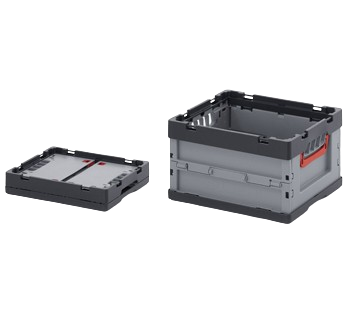
Folding pallet boxes have collapsible sides, reducing their volume when empty. This can save warehouse space and lower the cost of return transport.
Can plastic pallet boxes be stacked?
Many plastic pallet boxes are designed to stack when loaded, but the permitted stacking load varies between models and operating conditions.
Always check the individual specification and ensure the load is stable and evenly distributed before stacking.
Do you supply lids for plastic pallet boxes?
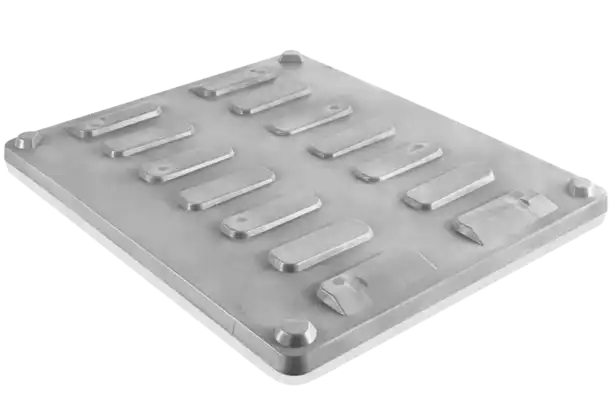
Yes. Loose-fitting and secure lids are available for selected pallet boxes and containers. Check the product page or contact us to confirm compatibility.
Sustainability, EPR and Recycling
Are plastic pallets recyclable?
Most plastic pallets are manufactured from recyclable HDPE or PP and can be mechanically recycled at the end of their usable life, provided they are accepted by an appropriate recycling facility.
Pallets should be reused as long as they remain safe and suitable before recycling.
Do your plastic pallets contain recycled material?
Many of our plastic pallets are made from recycled plastic, and select products contain 100% recycled material.
Recycled content varies by product, so please check the relevant product page or ask our team to confirm.
Can used plastic pallets help reduce EPR packaging costs?
Using supplied plastic pallets for continued reuse can offer an EPR cost advantage compared with placing new plastic packaging on the market.
EPR obligations depend on factors including the business, product, supply route and intended use. Customers should confirm their own reporting obligations, but our team can identify suitable used and reusable pallet options.
Do you collect unwanted plastic pallets and boxes?
Yes. We provide a UK plastic pallet and box collection service. Products that remain suitable for use may be inspected and returned to service, while damaged items can be sent for appropriate recycling.
In some cases, we may purchase reusable plastic pallets and boxes.
Is there a minimum quantity for collection?
We generally require at least 50 pallets or pallet boxes, although this depends on their type, condition, location and potential reuse or recycling value.
Send us photographs, quantities, dimensions and your collection postcode so we can assess the products.
How can I arrange a collection?
Complete our plastic pallet recycling enquiry form or call us on 03301 757766.
Please provide photographs, quantities, dimensions, condition and collection postcode. This will help us determine whether the products can be reused, purchased or recycled.


